Ankle Joint Replacement
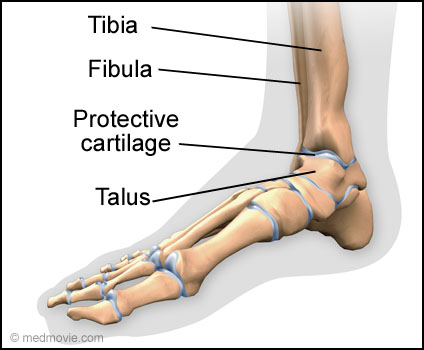
The ankle joint surfaces are formed by the tibia, fibula and talus. The surfaces are covered by cartilage.
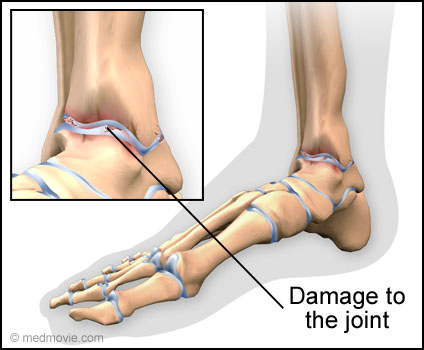
Certain conditions may indicate the need for a replacement for the ankle joint such as: osteoarthritis (shown), rheumatoid arthritis, post-traumatic arthritis, and fractures.
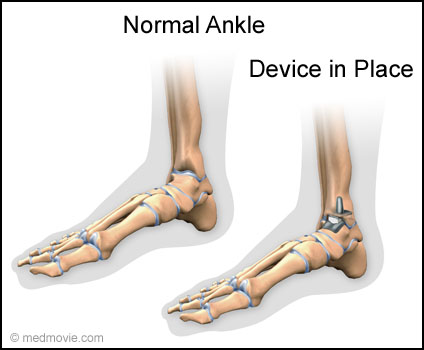
A replacement joint can help alleviate pain and improve function. The replacement joint usually has two parts that replace the joint surfaces and is made of a combination of metal and plastic.
Figure 1: Comparison of a normal ankle joint and a replacement ankle joint.
Figure 2: Normal ankle joint.
Figure 3: A damaged ankle joint.
Figure 4: Replacement ankle joint.
oml_0009a