
Please note: reference image is displayed in place of Flash media.

The series of bones and discs that surround and support the spinal cord in the back are collectively referred to as the spinal column. The spinal column is made up of 33 vertebrae that are named in groups according to the anatomical regions they occupy: cervical, thoracic, lumbar, sacral, and coccygeal. There are seven cervical vertebrae (C1-C7), twelve thoracic (T1-T12), five lumber (L1-L5), five sacral (S1-S5), and four coccygeal. The vertebrae from the cervical, thoracic and lumbar regions are separated by cartilaginous disks, while those of the sacral and coccygeal regions are fused together and do not contain disks.
The typical vertebra consists of two parts: an anterior segment called the body and a posterior segment comprised of a central spinous process and two laterally projecting transverse processes. Between these segments is a space referred to as the spinal canal. The spinal cord lies within the spaces of the spinal canal and is protected by the boney structures of the surrounding vertebrae.
©2026 Medmovie.com. All rights reserved. Medmovie.com creates and licenses medical illustrations and animations for educational use. Our goal is to increase your understanding of medical terminology and help communication between patients, caregiver and healthcare professionals. The content in the Media Library is for your information and education purposes only. The Media Library is not a substitute for professional medical advice, diagnosis or treatment for specific medical conditions.
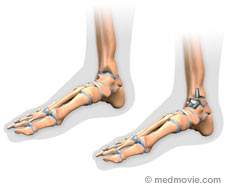 Ankle ReplacementThe ankle joint surfaces are formed by the tibia, fibula and talus. The surfaces are covered by cartilage.
Certain…
Ankle ReplacementThe ankle joint surfaces are formed by the tibia, fibula and talus. The surfaces are covered by cartilage.
Certain…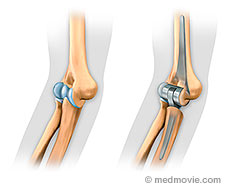 Elbow ReplacementThe elbow joint surfaces are made up of the humerus, radius, and ulna. The joint surfaces are covered by cartilage.…
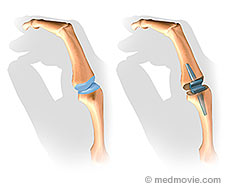 Finger ReplacementThe finger joint surfaces are formed by the proximal phalanx and metacarpal bones. The surfaces are covered by…
 Hip ReplacementThe hip joint is a ball and socket joint formed by the pelvis and femur (thigh bone). The joint surfaces are covered by…
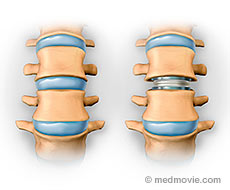 Disc ReplacementThe spine is made up of bones called vertebrae. The space between each vertebra is filled by an intervertebral disc…
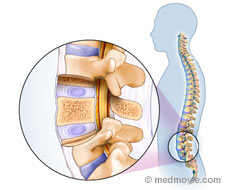 Intervertebral DiscsIntervertebral discs are fibro-cartilaginous discs that lie between the vertebral bodies of the vertebrae of the…
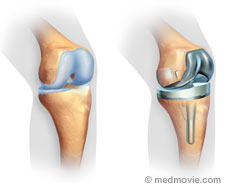 Knee ReplacementThe knee joint surfaces are formed by the femur, tibia, and patella (not shown). The surfaces are covered by cartilage.…
 Spine PathologyThere are several forms of spinal pathology that can affect the proper function of the spinal column and spinal cord.…
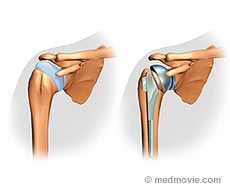 Shoulder ReplacementThe shoulder joint surfaces are formed by the humerus (arm bone) and the scapula. The surfaces are covered by…
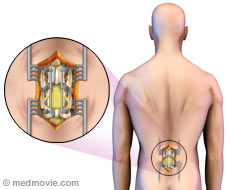 Spinal Fusion SurgerySpinal fusion is a surgical procedure in which two or more vertebrae are fused together using bone grafts and metal…
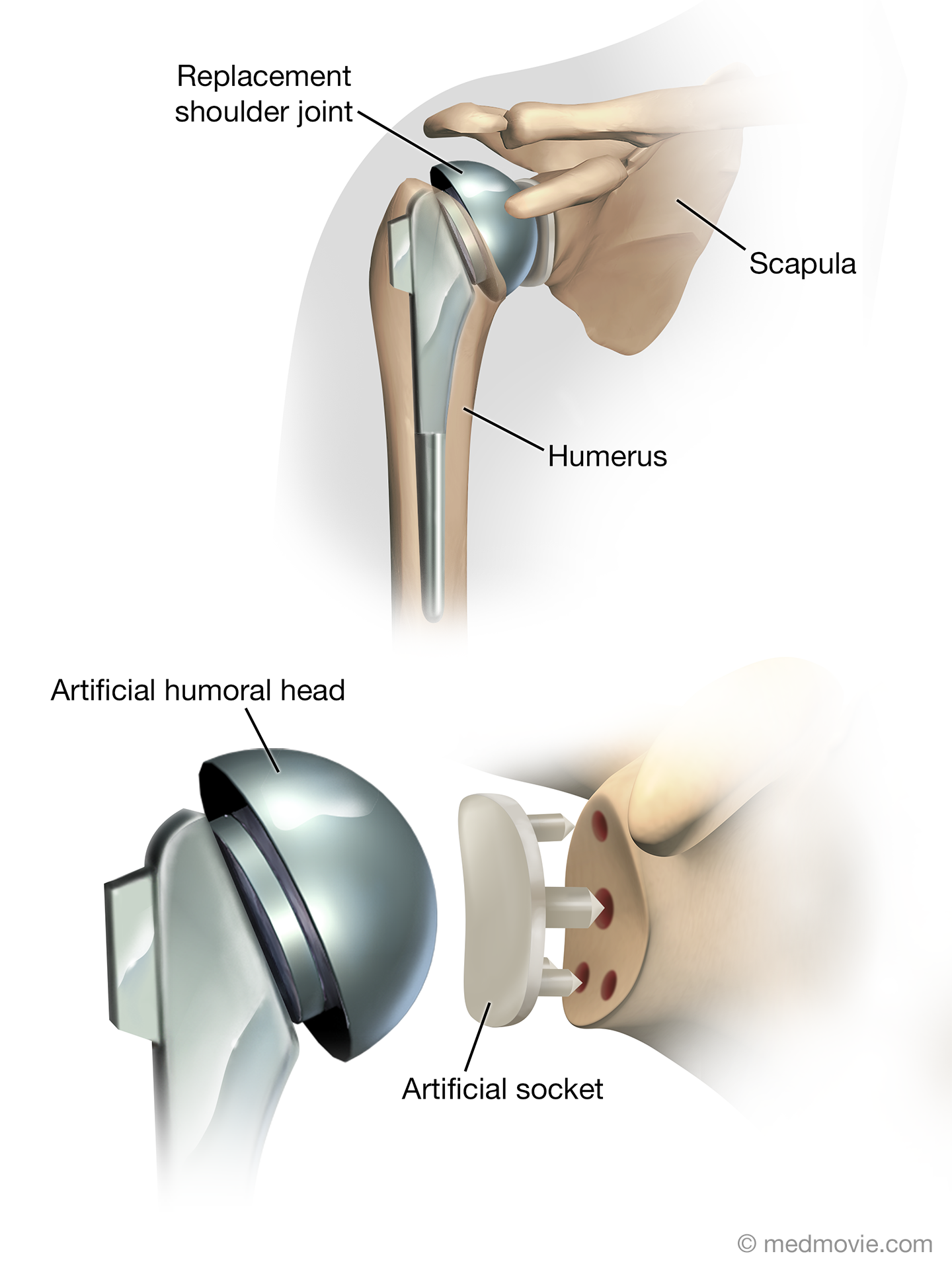 Shoulder Replace with ZoomThe shoulder joint surfaces are formed by the humerus (arm bone) and the scapula. The surfaces are covered by…
 TMJ ReplacementThe tempormandibular joint (TMJ) surfaces are formed by the skull and the the jaw. The surfaces are covered by…
 Wrist ReplacementThe wrist joint surfaces are formed by the radius, ulna, and carpal bones. The surfaces are covered by cartilage.…Ankle ReplacementThe ankle joint surfaces are formed by the tibia, fibula and talus. The surfaces are covered by cartilage.
Certain…Elbow ReplacementThe elbow joint surfaces are made up of the humerus, radius, and ulna. The joint surfaces are covered by cartilage.…Finger ReplacementThe finger joint surfaces are formed by the proximal phalanx and metacarpal bones. The surfaces are covered by…Hip ReplacementThe hip joint is a ball and socket joint formed by the pelvis and femur (thigh bone). The joint surfaces are covered by…Disc ReplacementThe spine is made up of bones called vertebrae. The space between each vertebra is filled by an intervertebral disc…Intervertebral DiscsIntervertebral discs are fibro-cartilaginous discs that lie between the vertebral bodies of the vertebrae of the…Knee ReplacementThe knee joint surfaces are formed by the femur, tibia, and patella (not shown). The surfaces are covered by cartilage.…Normal Spinal AnatomyThe series of bones and discs that surround and support the spinal cord in the back are collectively referred to as the…Spine PathologyThere are several forms of spinal pathology that can affect the proper function of the spinal column and spinal cord.…Shoulder ReplacementThe shoulder joint surfaces are formed by the humerus (arm bone) and the scapula. The surfaces are covered by…Spinal Fusion SurgerySpinal fusion is a surgical procedure in which two or more vertebrae are fused together using bone grafts and metal…Shoulder Replace with ZoomThe shoulder joint surfaces are formed by the humerus (arm bone) and the scapula. The surfaces are covered by…TMJ ReplacementThe tempormandibular joint (TMJ) surfaces are formed by the skull and the the jaw. The surfaces are covered by…Wrist ReplacementThe wrist joint surfaces are formed by the radius, ulna, and carpal bones. The surfaces are covered by cartilage.…
Wrist ReplacementThe wrist joint surfaces are formed by the radius, ulna, and carpal bones. The surfaces are covered by cartilage.…Ankle ReplacementThe ankle joint surfaces are formed by the tibia, fibula and talus. The surfaces are covered by cartilage.
Certain…Elbow ReplacementThe elbow joint surfaces are made up of the humerus, radius, and ulna. The joint surfaces are covered by cartilage.…Finger ReplacementThe finger joint surfaces are formed by the proximal phalanx and metacarpal bones. The surfaces are covered by…Hip ReplacementThe hip joint is a ball and socket joint formed by the pelvis and femur (thigh bone). The joint surfaces are covered by…Disc ReplacementThe spine is made up of bones called vertebrae. The space between each vertebra is filled by an intervertebral disc…Intervertebral DiscsIntervertebral discs are fibro-cartilaginous discs that lie between the vertebral bodies of the vertebrae of the…Knee ReplacementThe knee joint surfaces are formed by the femur, tibia, and patella (not shown). The surfaces are covered by cartilage.…Normal Spinal AnatomyThe series of bones and discs that surround and support the spinal cord in the back are collectively referred to as the…Spine PathologyThere are several forms of spinal pathology that can affect the proper function of the spinal column and spinal cord.…Shoulder ReplacementThe shoulder joint surfaces are formed by the humerus (arm bone) and the scapula. The surfaces are covered by…Spinal Fusion SurgerySpinal fusion is a surgical procedure in which two or more vertebrae are fused together using bone grafts and metal…Shoulder Replace with ZoomThe shoulder joint surfaces are formed by the humerus (arm bone) and the scapula. The surfaces are covered by…TMJ ReplacementThe tempormandibular joint (TMJ) surfaces are formed by the skull and the the jaw. The surfaces are covered by…Wrist ReplacementThe wrist joint surfaces are formed by the radius, ulna, and carpal bones. The surfaces are covered by cartilage.…