
Please note: reference image is displayed in place of Flash media.
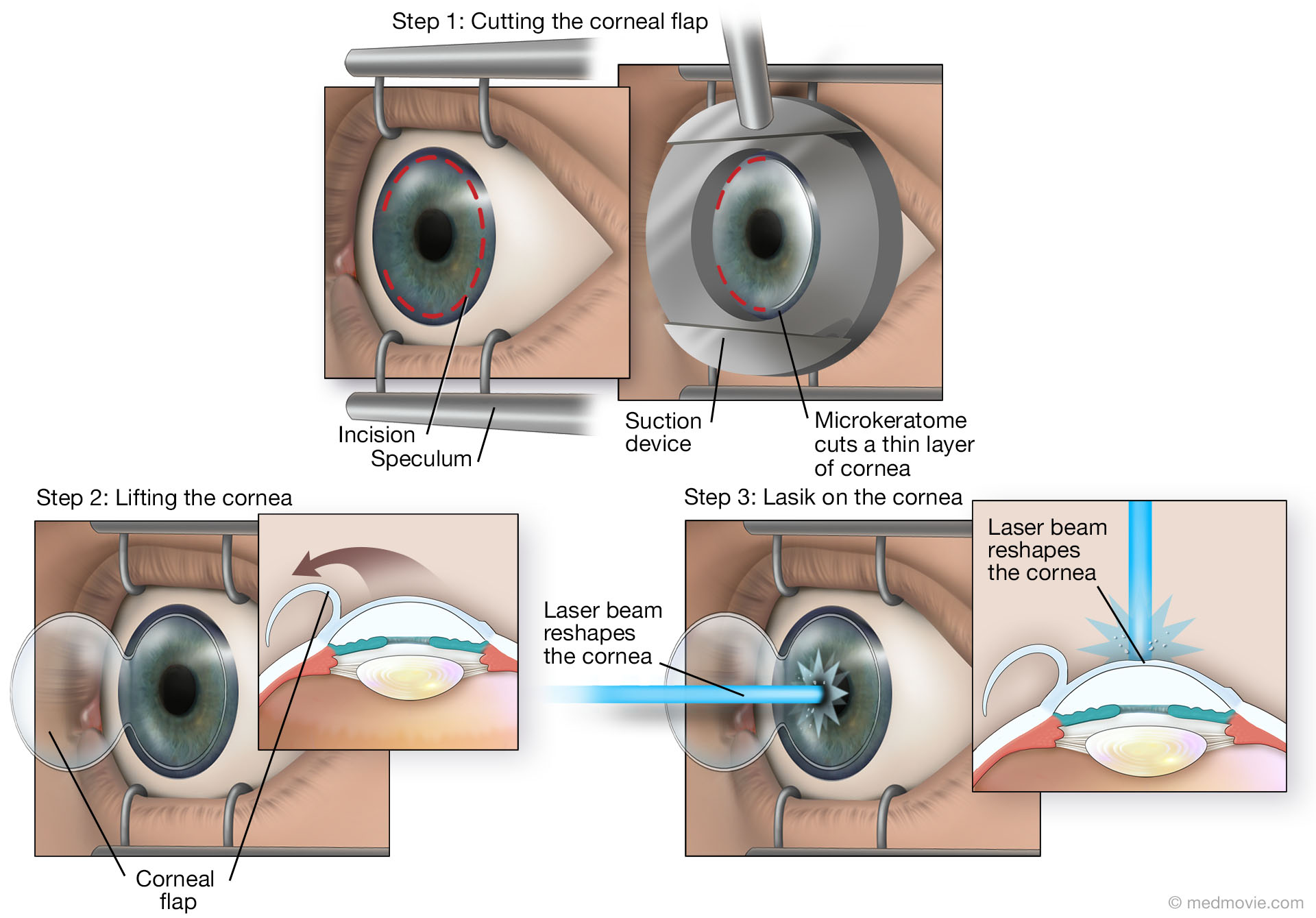
Laser-Assisted in situ Keratomileusis, or LASIK, is a type of laser eye surgery that is used to correct such vision problems as myopia, hyperopia, and astigmatism. During LASIK surgery, a laser beam is used to reshape the cornea of the eye.
LASIK surgery is usually performed in two main steps. In the first, a device called a speculum is used to hold the eyelids open and a corneal suction ring is applied to the eye, immobilizing it for surgery. A microkeratome blade is then used to create a flap in the cornea, leaving one section remaining anchored to the eye. The flap is folded back to reveal the middle section of the cornea, or stroma, underneath.
In the second step of LASIK surgery, a excimer, or ultraviolet, laser beam is used to reshape the cornea by removing thin layers of tissue. The cornea is reshaped in different ways to correct for different vision problems. Afterward, the corneal flap is closed and allowed to heal.
©2026 Medmovie.com. All rights reserved. Medmovie.com creates and licenses medical illustrations and animations for educational use. Our goal is to increase your understanding of medical terminology and help communication between patients, caregiver and healthcare professionals. The content in the Media Library is for your information and education purposes only. The Media Library is not a substitute for professional medical advice, diagnosis or treatment for specific medical conditions.
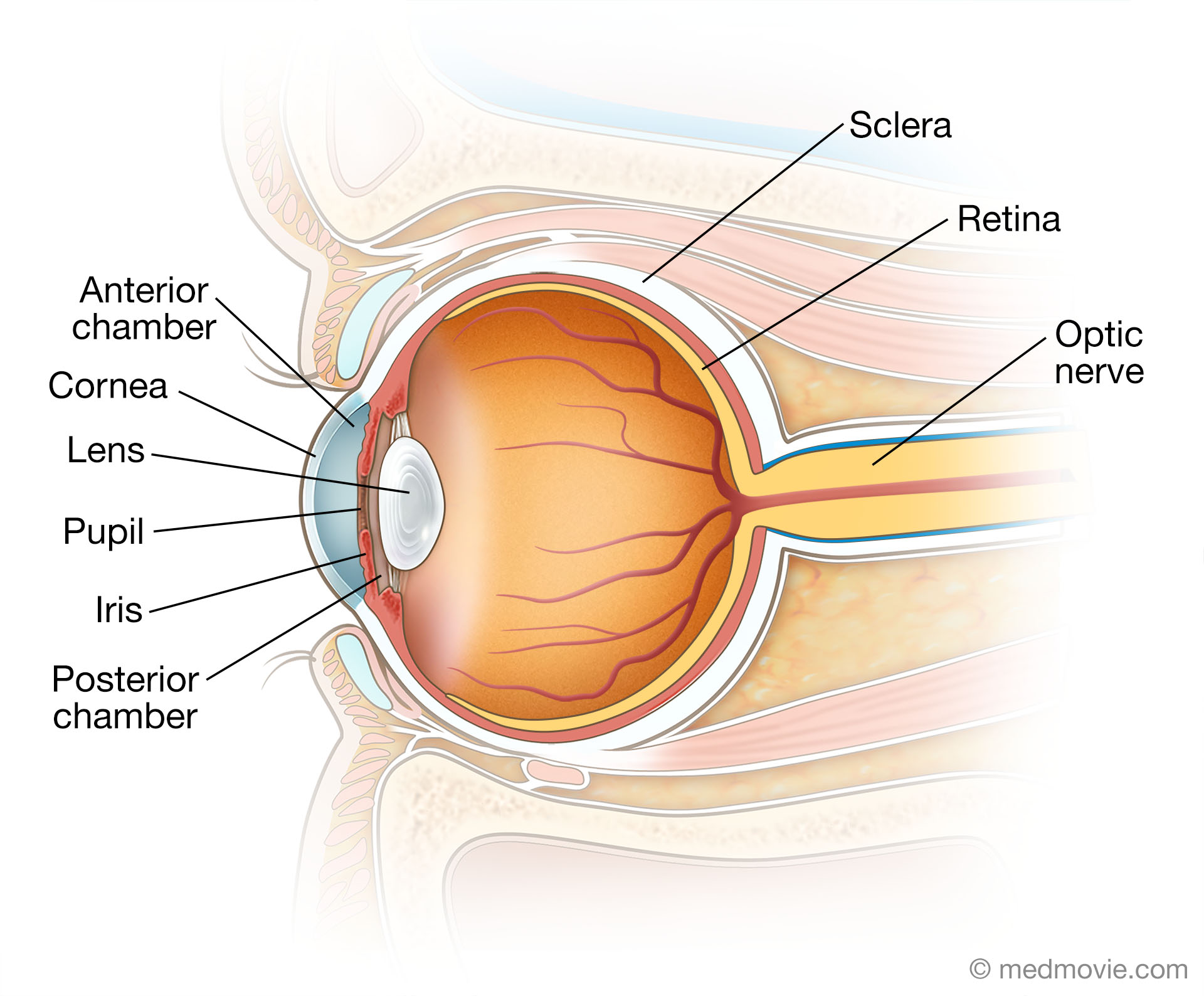 Anatomy of the EyeThe eyeball is the organ of sight in human beings. An opaque, tough, protective layer referred to as the sclera, or…
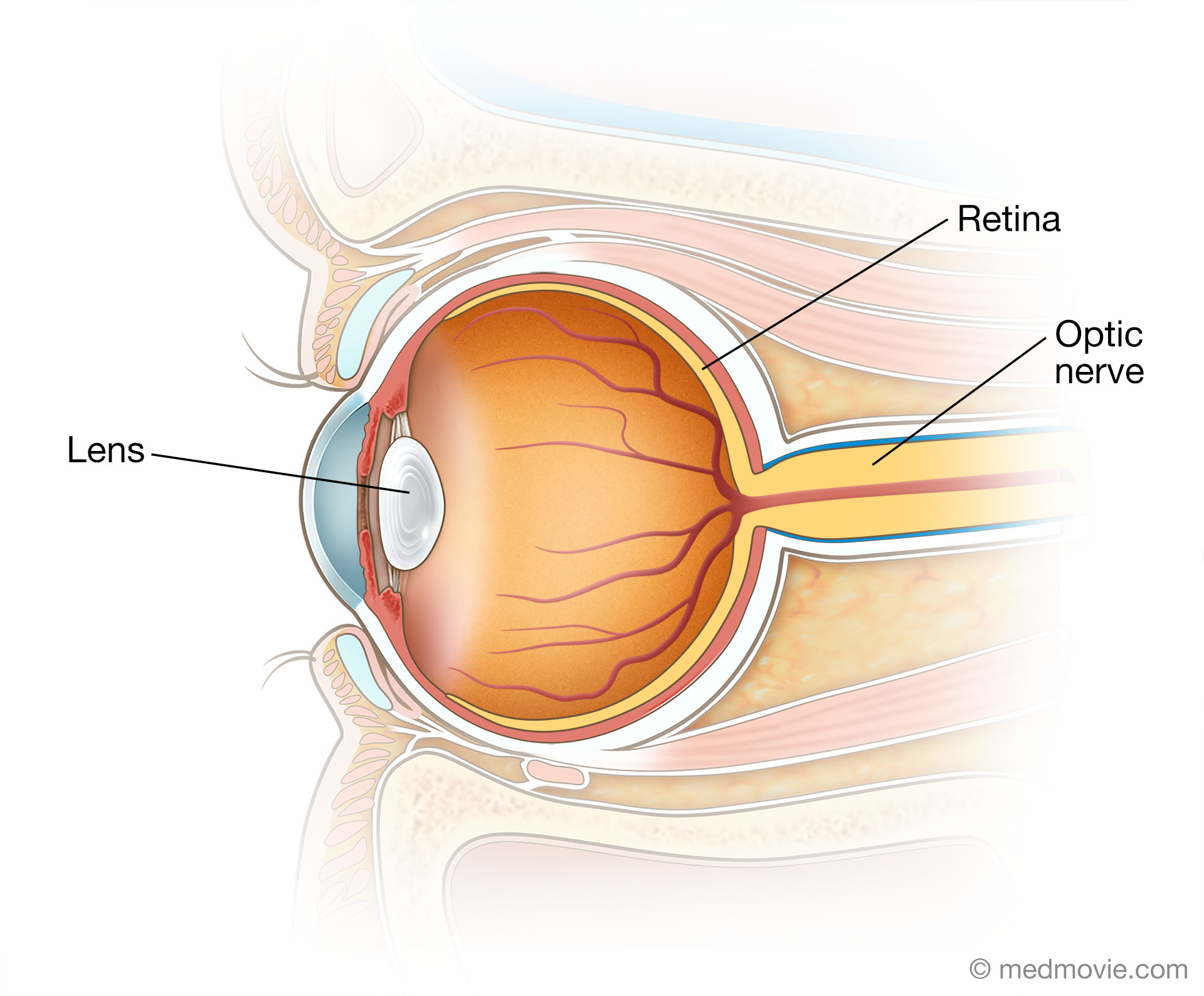 RetinaThe retina is the light sensitive inner layer of the eye. It receives light that passes through the cornea, pupil and…Anatomy of the EyeThe eyeball is the organ of sight in human beings. An opaque, tough, protective layer referred to as the sclera, or…LASIKLaser-Assisted in situ Keratomileusis, or LASIK, is a type of laser eye surgery that is used to correct such vision…RetinaThe retina is the light sensitive inner layer of the eye. It receives light that passes through the cornea, pupil and…